

Almost There, But Not Quite Yet – Part 2

In a culture filled with chaos and confusion, faithful and committed Christian communication is needed more than ever. Disruption is the new normal and the Church is called to lead on demonstrating to a watching world “unity in Christ.”


Unfortunately, politics, racism, and religion have replaced the Word of God in guiding some people’s beliefs, habits, attitudes, and actions. Thoughts, feelings and emotions that are believed to be at odds with ones integrity can cause people to lash out at others. Even if that integrity has been built on a false narrative. But even though “the flowers fade, and the grass will wither, the Word of God lasts forever.”


Most of us remain trapped in the narrow framework of the dominant liberal and conservative views of race in America, which with its worn-out vocabulary leaves us intellectually debilitated, morally disempowered, and personally depressed.


The Barna Group validated what we presented in Part 1. Their research uncovered, what every person of color already knew – “Church’s efforts toward unity in recent decades seem to be insufficient in helping to understand or rectify the challenges experienced by worshippers of color, especially Black individuals, for whom issues of race in the U.S. are front and center.”


“Our truncated public discussions of race fail to confront the complexity of the issue candidly and critically. The predictable pitting of liberals against conservatives, Great Society Democrats against self-help Republicans, reinforces intellectual parochialism and political paralysis.


We confine discussion about race in America to the ‘problems’ Black people pose Whites rather than consider what this way of viewing Black people reveals about us as a nation.


This paralyzing framework encourages liberals to relieve their guilty consciences by supporting public funds directed at ‘the problems’; but at the same time, reluctant to exercise principled criticism of Black people, liberals deny them the freedom to err. Similarly, conservatives blame the ‘problems’ on Black people themselves and thereby render Black society misery invisible or unworthy of public attention.


Hence, for liberals, Black people are to be ‘included’ and ‘integrated’ into ‘our’ society and culture, while for conservatives, they are to be ‘well behaved’ and ‘worthy of acceptance’ by ‘our’ way of life. Both fail to see that the presence and predicaments of Black people are neither additions to nor defections from American life, but rather constitutive elements of that life.” This description provided by Princeton Professor Cornell West highlights the need for a new conversation. A non-political and biblical conversation that emphasizes that we must always prefer people over any pleasures that might bring us joy.
These conversations must be grounded in equity. Not equity from the Republican perspective of identity politics or the Democratic perspective of diversity, but from the Kingdom party perspective of the Imago Dei. The Bible teaches about the value of work and the value of equal opportunity. The most productive and progressive society is one in which every member has full and unencumbered access.


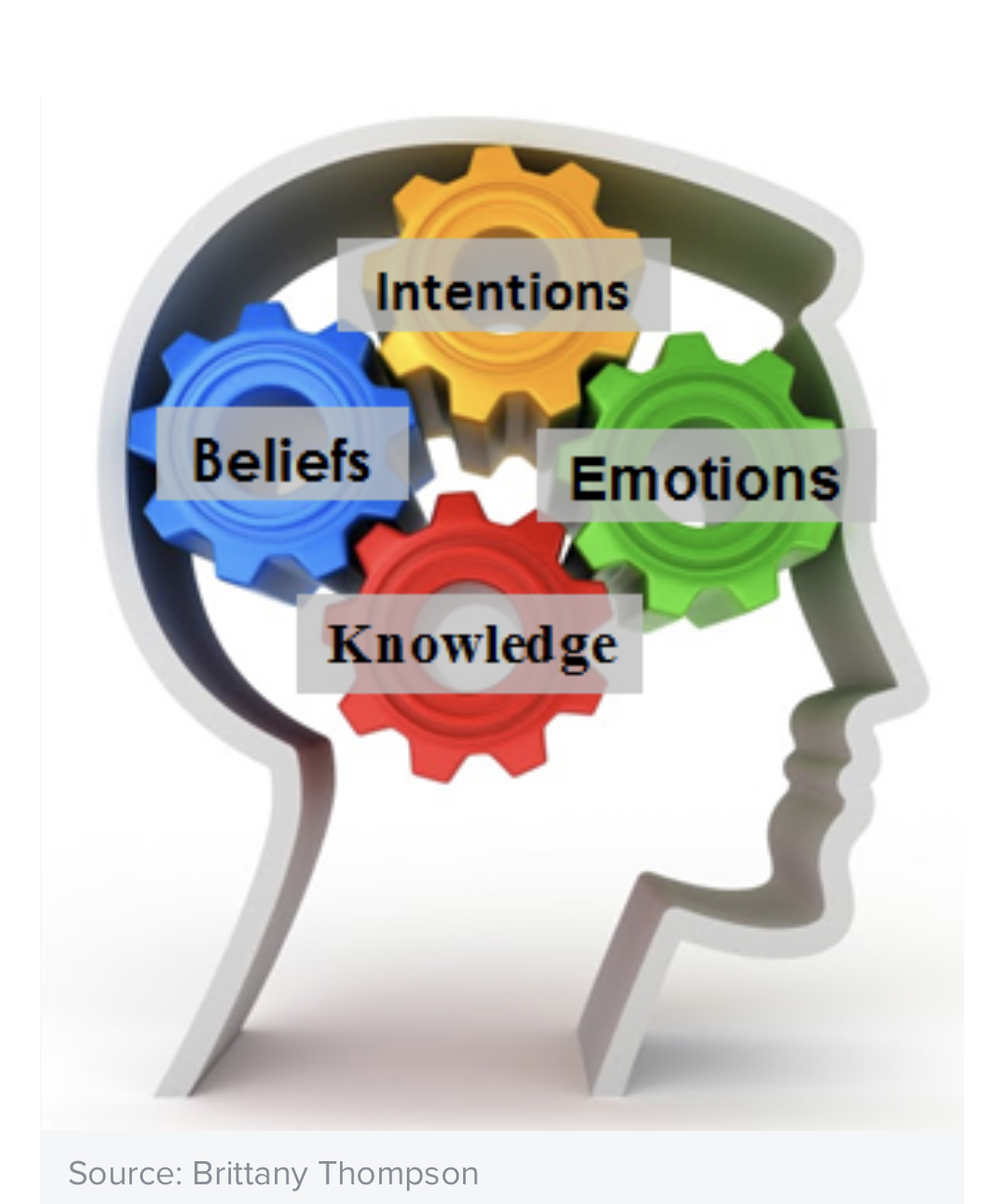
Equity is not a program or initiative; it is a belief, a habit of mind. As I have stated many times: What you believe about someone determines how you label them. Those labels dictate how you (and others) choose to engage or disengage with them. Achieving true equity must be a moral imperative, and it serves as a central and essential component of any attempt to achieve the unity Jesus speaks of in the Bible.


Equity is not a guarantee that everyone will succeed. Instead, it assures that everyone will have the opportunity and support necessary to succeed. In an equitable system, the barriers that inhibit progress are removed.


From the balcony, solutions exist, and we are almost there, but not yet.
As believers, we are actively taking part in the kingdom of God, although the kingdom will not reach its full expression until sometime in the future. Jesus’ parables of the kingdom picture it as yeast in dough. In other words, the kingdom is slowly working toward ultimate fulfillment. It is not sporadically “breaking through” to bring us comfort in this world. Therefore, our efforts will need to be continuous and not a point-in-time solution.


It starts with forming or enhancing relationships with outgroup members; not pushing away from them.


Forming relationships with outgroup members can have
myriad individual benefits, helping individuals widen their social circles, feel less stress and anxiety in intergroup contexts, and reduce their prejudices. But to benefit from the consequences of outgroup relationships, individuals must first build them.


The believer is in a lifelong struggle with the flesh (Romans 8:13). Likewise, the church is a fellowship of persons who are both new creatures in Christ (2 Corinthians 5:17) and still imperfect sinners. As we await our glorification and the destruction of our sinful natures, we must continue our process of sanctification, the daily process of growing into the very image of Christ. We accomplish this by “exercise yourself to godliness” (1Tim 4:7) – demonstrating love one to another, activating the fruits of the spirit, engaging in conversations and actions to unify, and being God’s witness here on earth for the world to see a better way. In effect, you’re saying to Him, Father, don’t let me waste this difficult time the country faces. Use it for my long-term benefit and to enhance Your glory through my life.


In the meantime, stay prayerful, God is up to something. We’re almost there, but not quite yet . . .

Almost There, But Not Quite Yet – Part 1

What it seems like from the outside isn’t always what it’s like on the inside. Most conversational breakdown comes from a person’s own struggle. People from all walks of life struggle. Most don’t want to admit it. But when you are struggling internally, it’s hard to even attempt to understand the other sides perspective.


Over the past two months, our conversation on racism has intensified. As a country, we have been dealing with this issue for over 50 years. By now, we should know better. Compassion should cause us to do better, and faith should compel us to be better. “People often define racism as disliking or mistreating others based on race. That definition is wrong,” said Stephen Roberts, Professor at Stanford. “Racism is a system of advantage based on race. It is a hierarchy.”


It’s 2021; we’ve made some progress, but we’re not there yet. Reasonable people can see things differently, yet we seem to be devoid of the Holy Spirit’s animating movement in and through us in this hour. America is forced to face a reality and conversation some would prefer to ignore – that racism is not only alive and well, but that it is widespread. Bishop Reverdy Ransom wrote that, “despite being faithful Christians and loyal Americans, Blacks have never gotten much justice out of White Christian America. Not even Jesus has been able to break the color line.”


Pastors are in a prime position from which to shape how their congregation view race because there isn’t a Black heaven and a White heaven. A proper church will one day eschew the label of Black or White Church and be a Universal Church. The dark, divisive nature of politics perpetuates the socialization process by which some pastors transmit their beliefs about race to their congregation, through implicit,explicit, intentional, or accidental means. They can minimize the humanization of people by focusing on protest, policing, property, prosperity, polls, and the most insidious passivism.


Passivism is overlooking or denying the existence of racism to obscure reality, encouraging others to do the same and allowing racism to fester and persist; exploiting and widening the fissures that might separate us. As Phyllis Katz states, “They tend to adopt a colorblind ideology (i.e., believing that race does not matter and that conversations about race should be avoided), which leaves the observations and myths learned from the broader society unchallenged and reinforces the legitimacy of racial hierarchy.”


A large part of White America views racism as “your problem, not mine. I don’t have to deal with it if I don’t want to. Stop trying to make it my problem.”
We hear,


  • “At this point, the whole race thing is over. We’ve transcended it. We had a Black president, so clearly, we are not a racist country.
  • “All that stuff is ancient history; things have changed.”
  • “It’s time to get past this race thing and move on. We need to talk about more important things like the Gospel.”
For Black Americans, faith and racial justice have long intersected and as long as there is racism, there will be a need for the Black Church.
We hear,
  • “Polarization of national politics in recent years has led Black people who previously worshipped at multiracial churches to decide they belong in predominantly Black churches.”
  • “As long as the country continues to, on the one hand, say: ‘There’s no such thing as race and we’re all one,’ but on the other hand effectively live as if that is not the case, as if it doesn’t matter, then we will always seek out a separate faith-based place to express who we are.”
  • “Some are leaving those churches because they’re disillusioned with the fact that those leaders either avoid altogether or don’t speak adequately to the issues with their congregations.”


According to Glenn Singleton, these conversations are difficult because people have very different communication styles and desired outcomes. For many people of color, a productive conversation about race is, in and of itself, healing, whereas for many White people, the conversation is often viewed as threatening, especially when it appears to have no concrete resolution, focused action, or determined result. And especially if it requires personal accountability to a solution.


The country has become split into camps that don’t just disagree on politics, policing, polls, policy, and treatment of people; they see each other as immoral and threatening. They dangerously will kill or attack members of another group, focusing less on triumphs of ideas than dominating the opposing party’s abhorrent supporters.


Social tribalism playing out in our political affiliations, religion, place of residence, and social status. As humans, we have an evolutionary drive to form cohesive social groups, self-identify, then stick to those groups. Most times, staying in your own group or area, hardens perceptions, preferences, and beliefs through the denial of intergroup contact.


This sense of tribalism affects our social health and adds to growing divisiveness among Christians. Eliminating any effort to talk to people outside your bubble; people who don’t look like you or worship like you or watch the same news channel as you as a way to bridge the divide.


“Groups have become bonded by faith that their side is morally superior to the other — echoing the ties that sometimes bind the religiously faithful,” according to Federal government communications strategist Clark Merrefield. Something has happened in this country that has fostered a zero-tolerance for meaningful distinctions turning minor disagreements into a cause for demonization.


The enemy understands our weak spots and patterns of behavior. He gets that human things will sway humans. Division based on racial differences are easy targets. Even though race is a social construct not a biological difference.


So, how do you engage in a conversation that is viewed as a “problem”? A conversation in which engagement is optional at best, some are reluctant to developing an understanding, and in the words of Oprah Winfred, “racism is the day-the-day wearing down of the spirit.”


In the next issue, we will go to the balcony to see how we can make progress through better understanding the contextual influences, psychological processes, and developmental mechanisms that can facilitate courageous cultural conversations.


In the meantime, stay prayerful, God is up to something. We’re almost there, but not quite yet . . .