


“A leader is a person who must take special responsibility
for what’s going on inside him or herself,
inside his or her consciousness,
lest the act of leadership create more harm than good.”
– Parker Palmer
The insurrection attempt on January 6, 2021, demonstrates how a leader’s strongholds can affect other people’s beliefs, attitudes, and actions. It’s been compared to Kristallnacht, the 1938 assault by Nazis in Germany. Many say, “This doesn’t represent who we are” or “This is not who America is.” It may not be who we want to be or desire to be. Still, these thoughts ignore the patterns of behavior that define the long history of this country. I am not engaging in political conversation but addressing the strongholds of self-interest, superiority, self-absorption, and sense of entitlement that led to more harm than good. The unwillingness to recognize another’s meritorious worth or hard-earned success indicates how often we think with our beliefs rather than about them. In this, we lose our truth and ignore Biblical principles.
I am not referring to Ted Cruz, who, seeking to raise his notoriety, challenged election results and even voted to reject the Electoral College certification hours after the riot. I’m not referring to Giuliani, who said, “let’s have trial by combat.” I’m not referring to Eric Trump, who said, “this is the party of Donald Trump, and we’re coming for you.” Nor am I referring to Ivanka Trump who called the rioters patriots. I’m not even referring to the President who incited violence through weeks of the rhetoric of a stolen election. Then encouraged supporters to “Be there, it will be wild!” and at the rally shortly before the would-be rioters descended on the capital said, “we’re going to walk down to the capital, fight like hell and take back our country.” Afterwards he said his speech was “totally appropriate.” And even on Monday suggested that “danger could follow the Democrats’ decision to impeach him a second time.”
I am referring to Christians who were used to take full advantage of Christianity, the brand. Those who explicitly or implicitly endorsed – character, integrity and divisiveness don’t matter as much as policies that support self-interest. In Parker’s words, those who demonstrated that they had not taken special responsibility for what was going on inside them and how it could create more harm than good. Religious leaders used pulpits to create and justify a movement, a belief system about the “other”, and a responsibility to take action against perceived lost freedoms. Christians in Congress through their rhetoric normalized political violence. An investigation is underway looking at “potential members of Congress” who gave tours to rioters prior to the insurrection. It’s no wonder so many of those rioters at the Capitol openly stated they were Christians. Some carried “Jesus saves” signs, some carried crosses, others said it was their God-given duty to do this for the President and the country. Faith leaders have to be accountable for what’s done for present gain without regard for future costs or consequences. The Gospel requires it.
What is behind this undying support that sacrifices the gospel for the partisan politics of someone that doesn’t even respect them? Support that leads to beating police with a blue lives matter flag. To post on Twitter that everyone in the Capitol “is a treasonous traitor” and that “death is the only remedy for what’s in that building.” To defecate inside the Capital building and track their feces in several hallways. That using violence as a means of achieving their desires is ok. The theologian Wayne Grudem speaking on behalf of religious leaders, summarized conservative Christian support as, “Conclusions drawn by a hostile interpreter of words that a sympathetic listener would understand in a positive way. I’m not sure [the President] ever intentionally affirmed something he knows to be false, which is how I define a lie.” Many conservative Christian leaders tell their congregation the president is “God’s chosen one” which carries a different connotation than “chosen by God.” Yet McKay Coppins wrote, “Former aides told me they’ve heard Trump ridicule conservative religious leaders, dismiss various faith groups with cartoonish stereotypes, and deride certain rites and doctrines held sacred. Trump speaking about a group of religious leaders who came to pray over him, told aides: Can you believe that bullshit?” Self-interest is a stronghold that can blind leaders causing them to overlook bad behavior and personal ridicule to advance their beliefs and cause.
In 2 Timothy 3:2 – 4, we are provided a list of attributes that characterize the leaders of dangerous seasons. Leaders whose outward appearance or form of Christianity and virtue makes them all the more dangerous. Let’s assure we are not those of whom scripture speaks. We can do better; we can be better. We are the representatives of Christ, and our witness carries significant influence. Be it positive or negative.
I am not here to curse the darkness. I am here to light a candle.
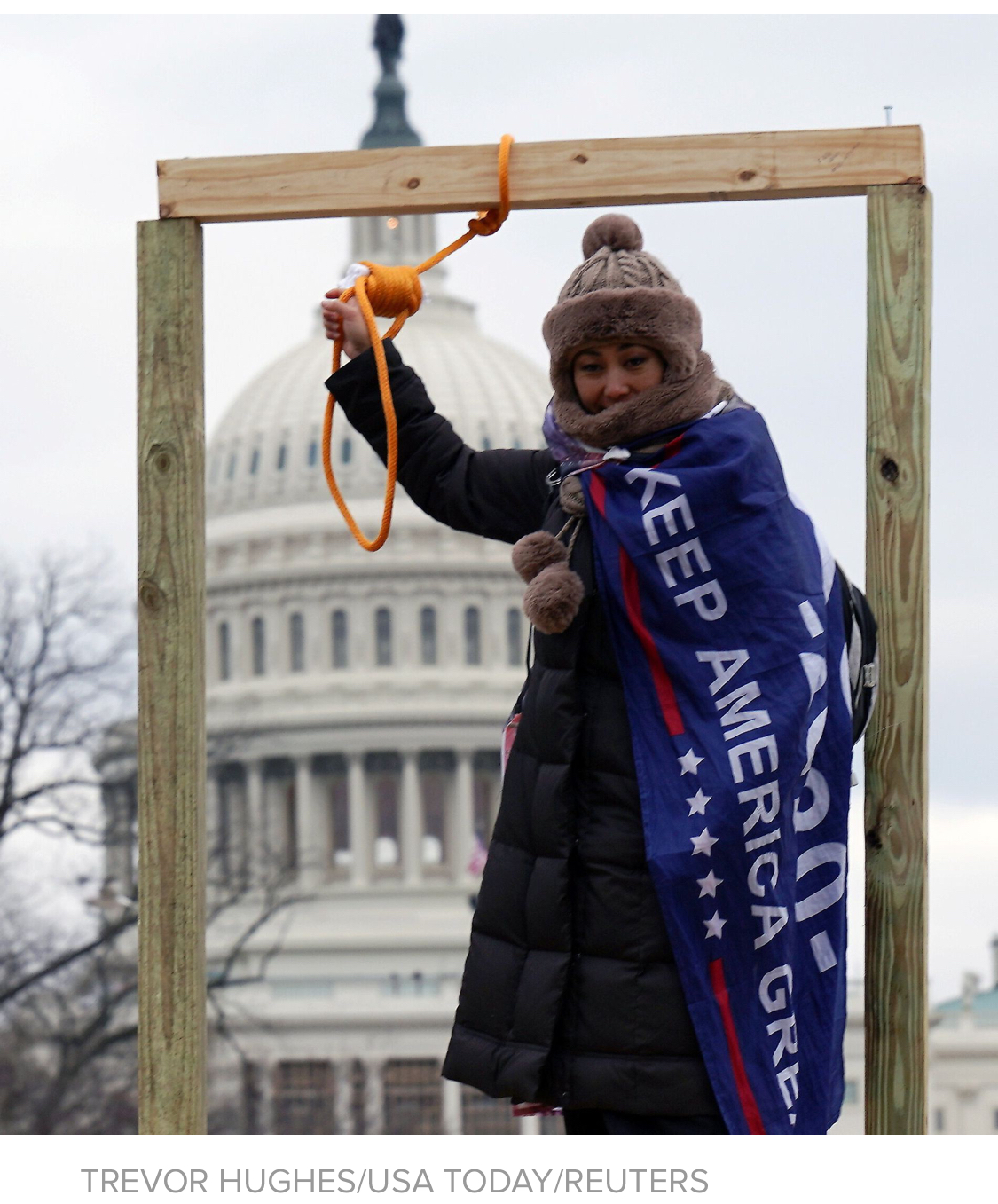
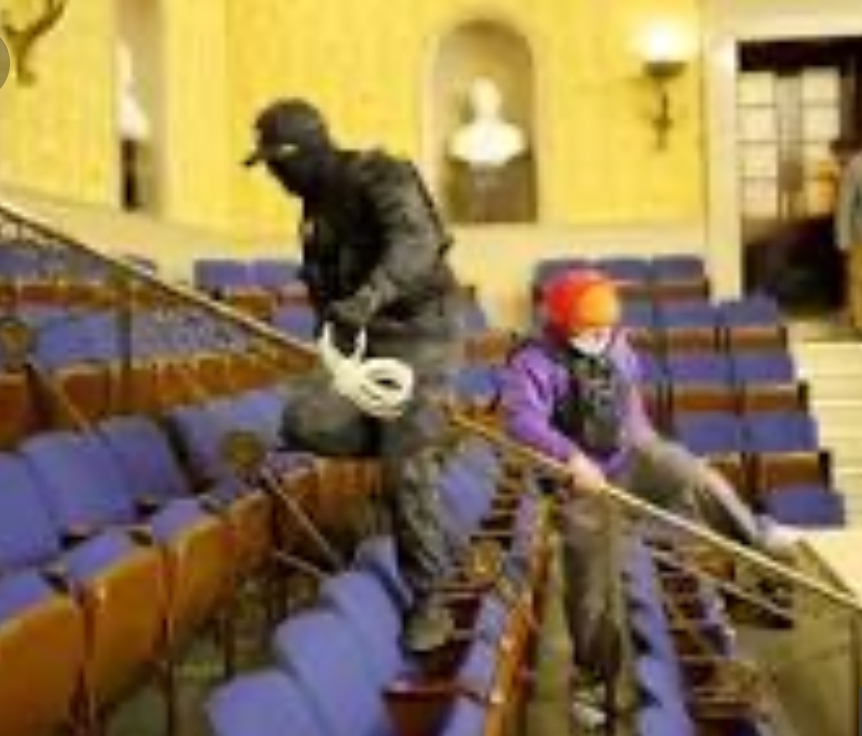
Insurrectionist carried stun guns, batons, knives, bulletproof vests, nooses, and pepper spray as they searched out members of congress. A retired Air Force officer carried zip ties, A retired firefighter threw a fire extinguisher at officers. Nooses, unambiguous symbols of mob mentality and racial terror, were strung up on the Capitol grounds to remind everyone exactly what the rioters stood for, who they stood against, and what their intent was.
This scene was eerily similar to Wilmington, North Carolina, in 1898. America’s first and only successful coup d’etat. Erin E. Evans recaps in a HuffPost article: “During the Reconstruction era, biracial governments came to power in cities across the South. Southern Democrats often retaliated against this new power structure. On Nov. 10, 1898, a mob of white men marched on City Hall in Wilmington with their pistols and rifles to overthrow the local government and remove black political leaders from their posts. They were successful. White supremacists took over. The mob destroyed Black-owned businesses, including the town’s Black newspaper. Dozens of Black residents ended up dead.” There was a belief that Black votes were inherently illegitimate. That was the basis of electoral fraud claims back then, and it is effectively the same claim that’s being made now.
History reports that from his pulpit at First Presbyterian Church, The Rev. Peyton Hoge triumphantly defended the 1898 racial violence. “Since we last met in these walls, we have taken a city. . . It has been redeemed for civilization, redeemed for law and redeemed for decency and respectability. . . For these things, let us give God the glory.” Several other white Wilmington pastors also lent their voices to uphold the violent acts.
To understand why churches were involved in the 1898 Race Riot, it helps to know that the biblical justification of slavery and segregation hailed from many Protestant churches’ pulpits in the South in the 1800s. Pastors in the South were preaching sermons saying that slavery was indeed God’s plan for the universe. Many of the pastors misinterpreted the Pauline view in Ephesians 6:5 that “slaves, obey your earthly master with respect and fear, and with sincerity of heart, just as you would obey Christ.” They argued that slavery was not condemned in the scriptures. And used stories from the Bible to buttress their argument, such as the story in Genesis about the Hamite curse. Noah cursed his son, Ham, after the son saw his father lying naked in his tent. They preached that the descendants of Ham were Africans and should be the servants of the white race.
For the pastors in Wilmington during 1898, the author added, “the surprising thing would have been if they had actually stood up and said, ‘Hey this is wrong.’ That would have been shocking and unexpected. For them to have done as they did was par for the course because their beliefs agreed with the white supremacist society.” Unfortunately, history is repeating itself and the explicit or implicit acts of faith leader are creating more harm than good.
When we strays from the radical love of Jesus into hateful partisan faith, we see the worst. The way to a more perfect union, to a nation where equality before the law and before God is more universal, is the way of Jesus. People of faith are called again and again and again to return to the foot of the cross. It’s a terrifying place to stand. But that is where the story Christians profess begins. It is a story about love, not loathing; generosity, not greed. In our time, the will for power has all too often overwhelmed the Words of Jesus.
SOURCE: Star News Online, 1898 riots still resonate with Wilmington’s black churches, Amanda Greene, Nov 6, 2008. The Atlantic, The Lost History of an American Coup D’État, Adrienne Lafrance and Vann R. Newkirk II, August 2017. NYT, Jon Meacham is the author of “The Hope of Glory: Reflections on the Last Words of Jesus from the Cross. Baptistnews.com, Faith leaders make a case for Trump to the delight of some and dismay of others, Mark Wingfield, October 2020.