

Learning And Relearning The “Truth About Reality”, Or The Truth About Urban Ministry

Some make it a habit of reading the experiences of Urban Ministry through the lens of stereotypes, symbols and beliefs and its difficult if not impossible to attach other meanings because there are no other interpretations beyond the “knowledge” they carried with them.  That knowledge would be “shadows cast on the wall” that prevent them from knowing the truth about urban ministry.  They take the shadows as objective representations of reality.  It’s time for us to help them confront their shadows so that they may know the truth about urban ministries.

Most times this is not an intentional act against another group but a lack of deep scriptural knowledge.   I am not referring to memorization or reading of scripture, but an exegetical study to understand the linkages and meaning of treatment to and of others in relationship to treatment of self.  The power behind Jesus commandment of loving your neighbor as yourself should flip the script on our day-to-day thinking.  This goes beyond the idea of just helping someone in need. This view does not allow you to look at them as less than, separate, inferior or not deserving of all that you would do for yourself or your family.

It is antithetical to think that we would do more for others than we would for ourselves.  We each see the world from our own self-interest first and then in service to others.  But this view contradicts scripture.  Let’s look at one of the most well intentioned concepts of service – mission trips.  On the surface they seems totally the right, the Christian thing to do and a learning opportunity for young people.  But from the side of those you choose to serve, it is as disrespectful as any action that one could engage.


I will use the word of two greatly respected figures, Martin L. King and Bishop Arthur M. Brazier, to unpack this concept in an attempt as was taught in Ephesians, to tear down the walls of separation in the church that worship the same God and has the hopes of a future in the same heaven.

King said – True altruism is more than the capacity to pity; it is the capacity to sympathize.  Pity may represent little more that the impersonal concern which prompts the mailing of a check, but true sympathy is the personal concern, which demands the giving of one’s soul.  Pity may arise from interest in an abstraction called humanity, but sympathy grows out of a concern for particular needy human being who lies at life’s roadside.  Sympathy is fellow feeling for the person in need – his pain, agony, and burdens.   Missionary efforts fail when they are based on pity, rather than true compassion.  Instead of seeking to do something with people, we have too often sought only to do something for them.  An express of pity, devoid of genuine sympathy, leads to a new form of paternalism, which no self-respecting person can accept.


Bishop Brazier said – Some in the church contribute money to support missionary hospitals and schools in foreign countries.  They take trips to involve themselves in the total life of people with whom they are working for the sake of Christ.  Why is it that some, while supporting total involvement abroad oppose total involvement at home?  The New Testament sets out clearly a position of equality when it unequivocally states that none of the biological, ethical, social or psychological distinctions by which we compartmentalize men and make some inferior and some superior has any validity as far as their standing before God in Christ is concerned (cf. Col.3: 11).  If this is the case then surely there can be no artificial distinction and barrier in our relationship with each other.  


I write this out of love for my brothers and sisters so all races, creeds and religions.  Those I serve with, beside and those yet to be in relationship.   Truth is never uncalled for.  There is no polish without friction and it is with men as someone has said about tea: if you wish to get its strength you must put it in hot water.  So the real opportunity for those outside the urban community is that there is no meaning in a given situation until you relate your own experiences to it, regardless of what you might have been taught about it.  Obtaining personal experience in meaningful relationship with other leaders in the urban communities plays a critical role in this process.  It is through a lived experience of being with others that stereotypical perceptions can be transformed.


A general implication of the arguments presented is that, like any diversity related discourse, the choice, conceptualization and the practice in the diverging context not remain essentially a contextual matter.


Let’s talk about it.  Hit me back with your comments, thoughts and questions.
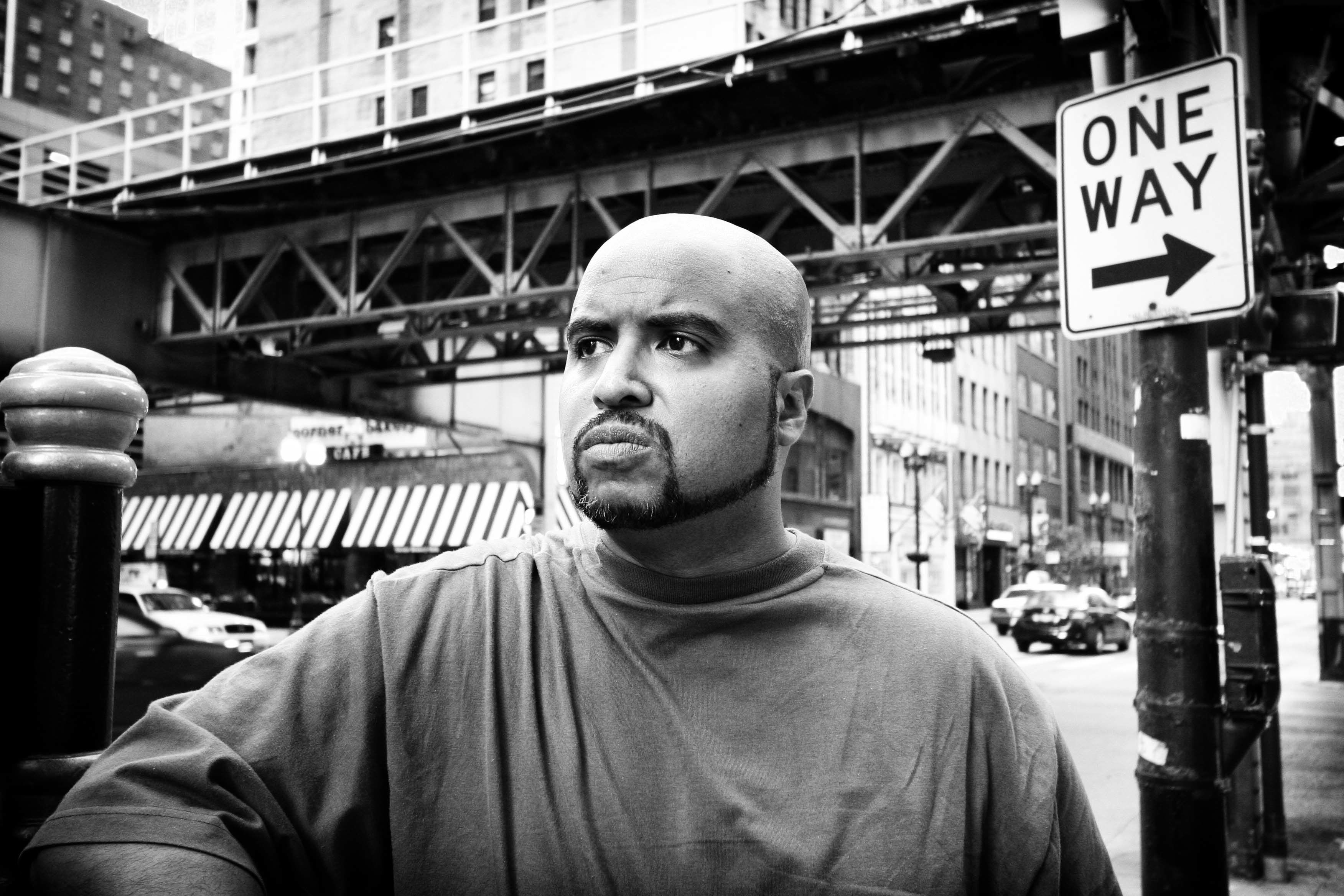
There is no one person that can speak on behalf of the entire urban community


GUEST POST: DANIEL WHITE HODGES


Today our guest blogger, Daniel White Hodges, is the North Park University Director of the Center for Youth Ministry Studies (CYMS).  Dan brings us his perspective of Urban Youth Ministry; continuing our 7 point series – Debunking the Misperceptions, Misunderstanding and  Misrepresentation of Urban Youth Ministry.


The days of singularized leadership are far gone. Unifying leaders such as Dr. Martin Luther King Jr., Malcolm X, Cesar Chavez, and Bobby Seal were great for their context, setting, time and era. However, we have had some major shifts in our Western American society over the last forty years which have affected how, in particular, young people see what the meta-culture defines as a leader. Shifts such as:


  • Industrial to post-industrial to information age
  • Technology & media
  • Narratives of life, theology, & God are plural
  • Trust is eroded with those in leadership positions
  • Trust & reliance is gnarled with systems & institutions among youth
  • A loss of generational connectivity & solace with younger generations
  • Titles are typically suspect


These are just a few of the many shifts that young people, especially those born after 1988, have had to contend with and live in. We are not even considering the chasm which exists between church leaders and youth. Young people today are more critical of their leaders and, as well so, hold them to a higher standard. Further, as it was seared into my worldview when I was on Young Life staff: you have to earn the right to be heard. And, quite honestly, many leaders do not want to put in that time to actually “earn” that right to be heard. Many urban leaders want to preach, lecture, and tell rather than listen, engage, and live with the young person.


Hence, no, there is no singularized leader, authority, and/ or person who can speak for the entire urban community—or even urban youth for that matter.


The closest person that spoke for many in the urban context was Tupac Amaru Shakur. Now, some of you might wrinkly your nose and squint your eyes at that persona. After all, wasn’t he a whoremonger, adulterer, drunk, and profane rhetorician? And the answer would be: yes. Yes he was. But, within that whoremongering, adultering, drunkenness, and profane discourse something deeper was at work; a fundamental attempt to make God more accessible to himself and to the people he considered to be the urban community. We as youth leaders cannot overlook that aspect. We cannot merely see the outward behavior and judge the heart. And we must begin to deconstruct such a figure to, dare I say, embody some of his characteristics. More on this later.


Leadership and having a voice is powerful. It is, in fact, power. The power to affect someone elses behavior to implement your ideas and thoughts. Power. Power to affect change with the inception of worldivews into the psyche. This does not come easy and many in this generation, as stated prior, are very critical of whom they give those psyche “keys” to. Moreover, the urban community is far too complex, intricate, multifaceted, and multifarious to have a singular voice on that narrative and life experience. Thus, when engaging the urban context we must consider the narratives of all; yes, even those we do not agree with; those who are nefarious in deed; those who are foul in personality; those who have dreadful historical pasts; those who are fastidious in everything called life. Yes, those are the ones God has called us to. Those are the ones whose narrative does not fit nicely in five step processes, alter calls, and one time conversions. This is the population that Christ called us to make disciples in the Great Commission.


So, no. There is no singular voice and narrative for the urban context. Why would there be? Can God be explained in one concept? I hope not. The ‘hood represents the complexities of human life that is articulated in outward expressions and aesthetics. Let us continue to embrace the diversity and mystery that is meta-narrative and life!

Let me hear your thoughts, questions, rebuttals, and narrative. Join in on the conversation!

To continue the conversation and go deeper please comment below, also check out:

www.whitehodge.com

Twitter: @danwhitehodge

Facebook: Daniel White Hodge


The Soul Of Hip Hop: Rimbs, Timbs, & A Cultural Theology (IVP 2010)

Heaven Has A Ghetto: The Missiological Gospel & Theology of Tupac Amaru Shakur (VDM Academic 2009)

Urban Leaders – If The Lord Calls You, He Will Establish You


God always has a special and unique way to call each one of us into ministry.  The Lord called Jeremiah by His spirit before he was born.  Before I formed you in the womb I knew you, before you were born I set you apart; I appointed you as a prophet to the nations (Jeremiah 1:5).  God chooses the way in which we are called into ministry.  Each of us has been essentially predestined to fill a particular place in the building of the Kingdom.  Everything that happens to us as ministers, from the point of birth is either directly planned by God or will definitely be used by Him to cause His will to be done.  This is part of how he establishes us.  He will open His Word to them and enable them to feed the people of God.  Jeremiah had the words of the Lord to speak to the people(Jeremiah 1:9)  Like Jeremiah our ministries must be based on God’s word and not man’s word.  We are to speak nothing but the Word we have been given from God.  The Lord set Jeremiah over the nations and kingdoms (Jeremiah 1:10).  Our promotion does not come from man but it comes from the Lord.  We will be exalted in due time after we humble ourselves.  Jeremiah was called to root out, to pull down and to destroy (Jeremiah 1:10).  We are called to preach and teach against sin and unrighteousness.  To help young people understand what it means to be separated from this world.  To teach them how to discern and make good choices as they walkout their destiny.

Whatever reservations or hesitations we have about our calling are understandable but not acceptable.  Jeremiah had several excuses, one “Lord, I cannot speak” (Jeremiah 1:6) he felt he was inferior in his ability to communicate effectively.  But the Lord will always put His words into the mouth of those He is equipping for ministry.  A second excuse was his Youth.  I do not know how to speak, because I am a youth (Jeremiah 1:6).  God replied “ Do not say; I am a youth, because everywhere I send you, you shall go (Jeremiah 1:7).  What was most important to God was his willingness to obey the word of the Lord.  His third excuse was that he was afraid to go because of the rejection that he would sense even by the expression on the people’s face.  The Lord commanded Jeremiah “do not be afraid of their faces, for I am with you to deliver you”.  God will give abundant grace for us to meet every fearful situation we may face.  God assures that if he calls us he will ensure we are established.


What hesitations do you have about your calling?  Let’s talk it out.